John's Corner
RS-232C Information
RS-232C defines three types of connection - electrical, functional and mechanical. It is intended for the data transmission range of 0 - 20Kbps over distances up to 15m and is the most commonly used interface.
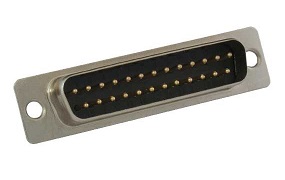
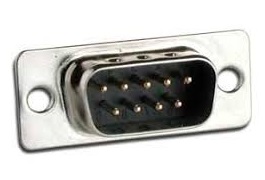
In practice, RS-232C is used up to 115Kbps over short distances and at lower speeds, over distances of 50m or more. It employs unbalanced signalling and is used with DB25 connectors as standard to interconnect Data Terminal Equipment (DTEs - eg. computers, controllers etc.) and Data Communications equipment (DCEs - eg. modems, converters etc). DTEs employ a male connector while DCEs employ a female connector. DB9 connectors are also used as a standard on IBM PCs and compatibles.
Serial data exits an RS-232C port through the Transmit Data (TD) lead and arrives at the destination port on the Receive Data (RD) lead. RS-232C is compatible with CCITT V.24 and V.28 standards and the ISO IS2110 standard.
| Signal |
Description |
DB25 |
DB9 |
| TxD |
Transmit Data |
2 |
3 |
| RxD |
Receive Data |
3 |
2 |
| RTS |
Request To Send |
4 |
7 |
| CTS |
Clear To Send |
5 |
8 |
| DSR |
Data Send Ready |
6 |
6 |
| GND |
Ground |
7 |
5 |
| DCD |
Data Carrier Detect |
8 |
1 |
| DTR |
Data Terminal Ready |
20 |
4 |
| RI |
Ring Indicator |
22 |
9 |
 |
|
 |
| DB25 Male Connector |
|
DB9 Male Connector |
Return to Technical Documents
John's Corner